
Field notes · Remote work
What a remote septic install actually takes
— a week on Savary
A week on Savary · November 8, 2026
A week on Savary
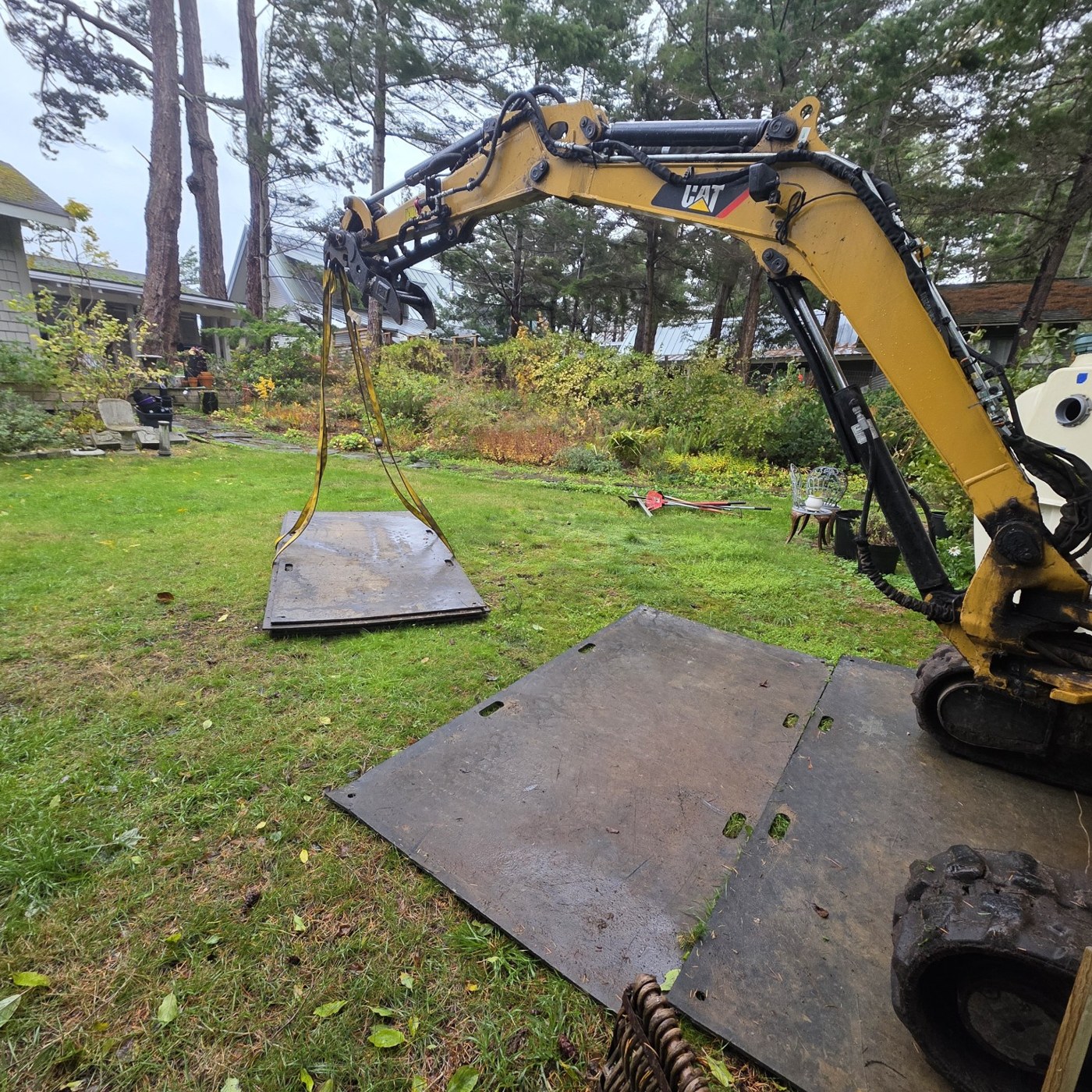
A new septic system shouldn't cost you your yard. That's easy to say on the mainland, where a truck can back in and out in an afternoon. On an island, everything about the job changes — and the yard is the first thing at risk.
We're on Savary this week, at a waterfront home overlooking the Salish Sea, putting in a treatment tank and the system that goes with it. Getting here was the first part of the job: barge timing, what can cross and when, and staging everything so the work can actually happen once we're on the island. There's no running back to the shop for a forgotten fitting.
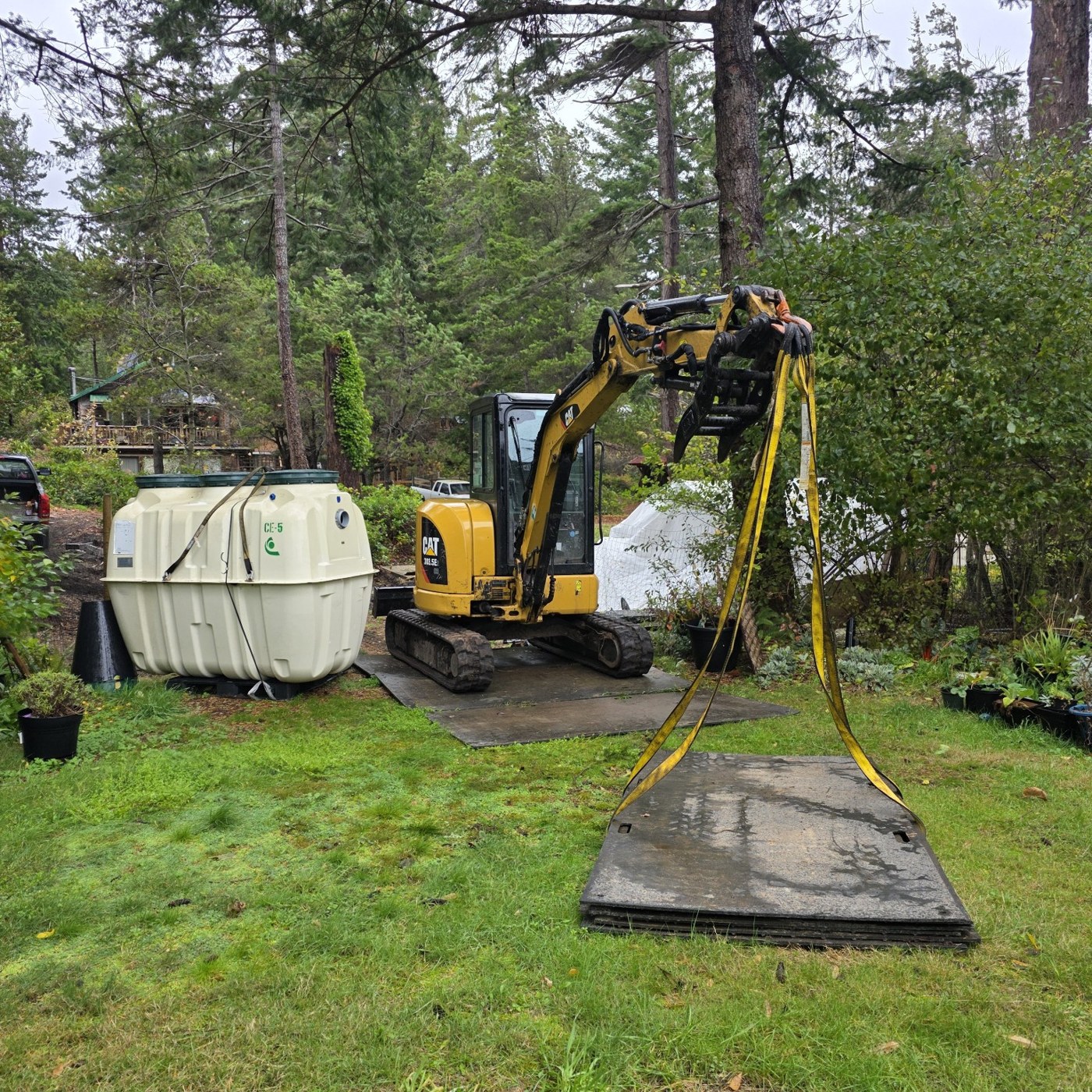
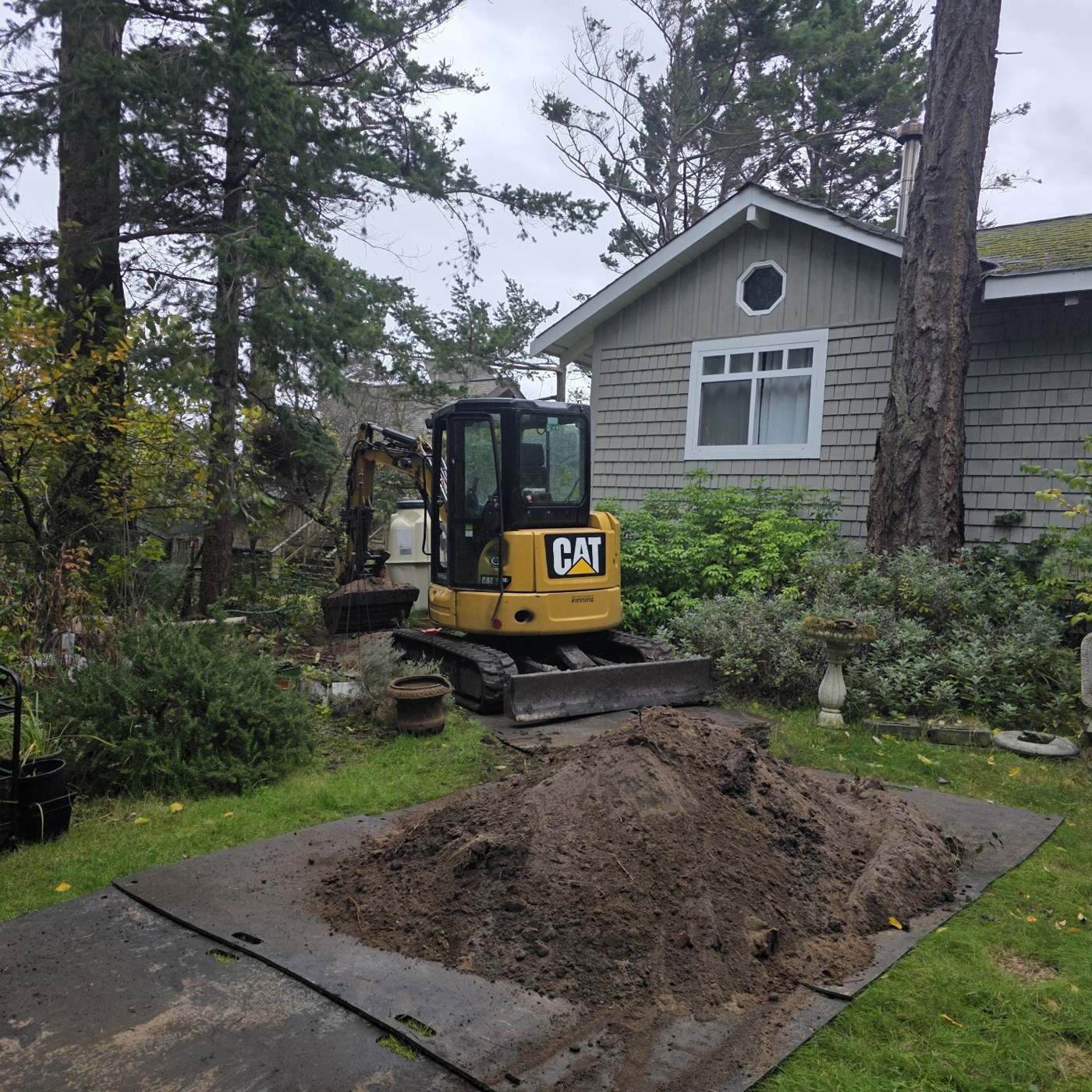
That's why the mats go down first. The tracked machine works off ground-protection mats, the spoil sits on mats, and the lawn and garden underneath stay exactly as they were. It's the same approach we use on mainland jobs, but on an island it matters more — there's no quick fix for a torn-up yard when you're working around a barge schedule.
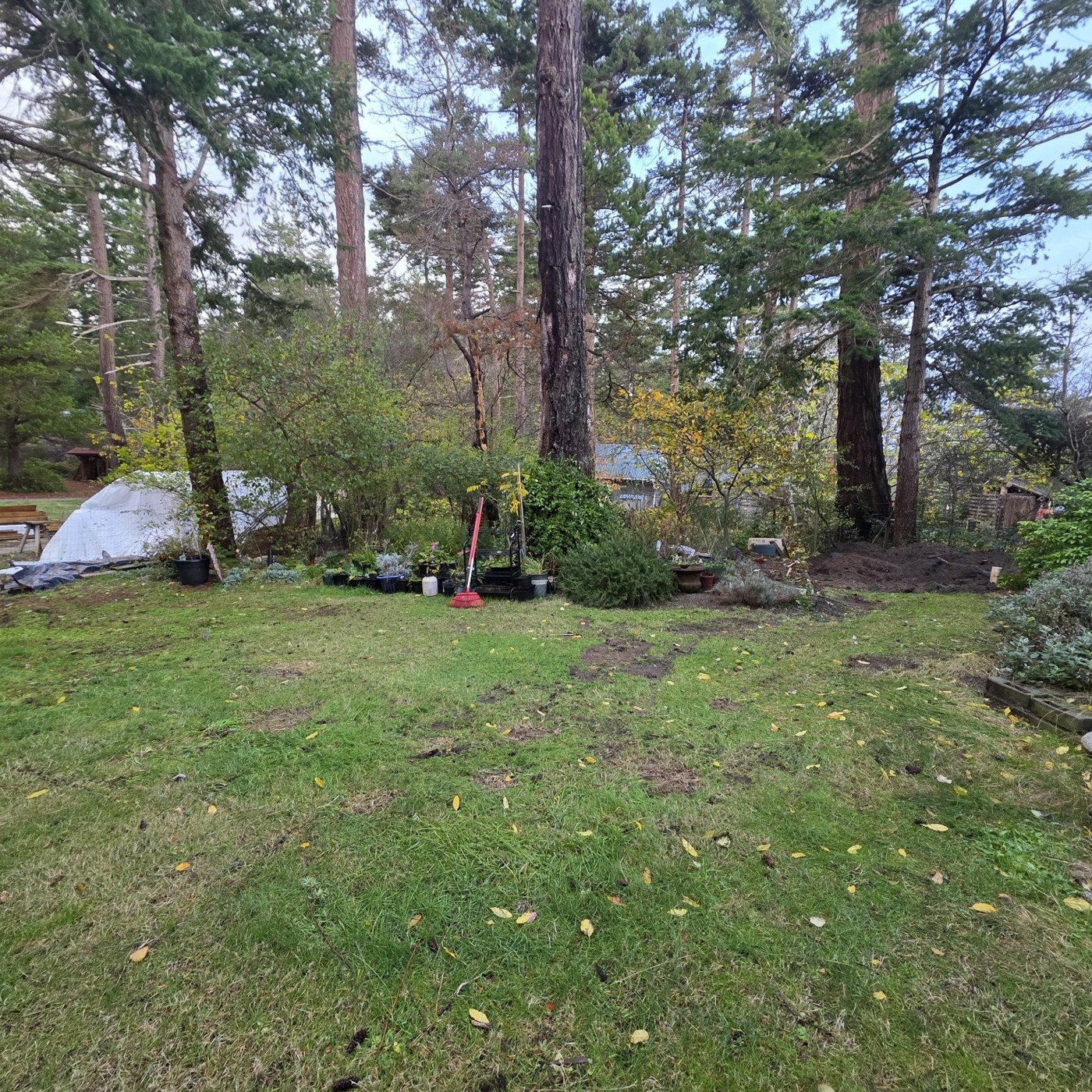
The photos tell it better than a paragraph can: machine on mats, tank going in, spoil contained, lawn untouched. The system underneath is the technical part — sizing, soil, setbacks, the right tank for the site. The part the homeowner lives with is what's on top. We plan the job so both come out right.
If you're on Denman, Hornby, Savary, or up the Alberni Inlet and wondering how a septic install works where you are, the short version is: tell us early. Landing, barge restrictions, slopes, staging — the earlier we know, the smoother the week goes. That's what the remote-work page is for, and it's the conversation we want to have before the barge is booked, not after.
Machine work complete. Minimal ground disturbance.
— Wrightway On-Site Wastewater · wrightwayonsite.ca